When a Marina Yard Is Telling You It Needs Help
Marina's coastal setting means yards face a steady combination of wind, salt air, and sandy soil. That environment tends to show wear in specific ways. Bare soil blows around, mulch disappears faster than it should, and gravel that wasn't set properly migrates across a driveway or walkway with every strong gust. If you're noticing any of the following, it's a good time to look at pavers, mulch, or rock as a solution:
- Dirt or mud tracked onto patios and walkways after any rainfall
- Garden beds with exposed soil that dry out quickly or erode at the edges
- A front yard that looks patchy because grass struggles in sandy coastal ground
- Walkways that have no clear separation from planting areas
- A side yard or utility area with no ground cover at all
- An existing paver path that has settled unevenly or grown weeds through the joints
None of these are purely cosmetic problems. Loose soil and poor drainage cause slow erosion. Undefined edges make maintenance harder every season. Pavers, mulch, and rock are practical fixes that also make a yard look finished and intentional.
What the Coastal Terrain in Marina Actually Means for This Kind of Work
Marina sits on the Monterey Bay, and much of the land here has sandy, well-draining soil that was shaped by coastal dune geography. That matters a lot when you're installing pavers or setting a rock bed. Sandy soil shifts more than clay-heavy soil, which means base preparation is especially important. A paver walkway or patio that isn't set on a properly compacted base will settle and tilt over time, creating tripping hazards and uneven surfaces.
The wind in Marina is consistent and can be strong, particularly in spring and summer. Light organic mulch can lift and scatter if it isn't the right weight and depth for the exposure. Heavier materials like river rock or decomposed granite tend to stay put better in windier spots and need less frequent replenishment. When Jaime and Stephanie assess a yard here, the exposure, slope, and soil all factor into what they recommend before any materials are brought in.
The housing in Marina includes a mix of older suburban homes and newer developments, many with modest-sized front yards and side yards that benefit from clean, low-maintenance ground cover. Rock and mulch beds are a natural fit because they reduce the watering and weeding load, which matters in a region where water conservation is a real concern. Pavers add structure to yards that often don't have much hardscape to begin with.
What the Work Actually Involves
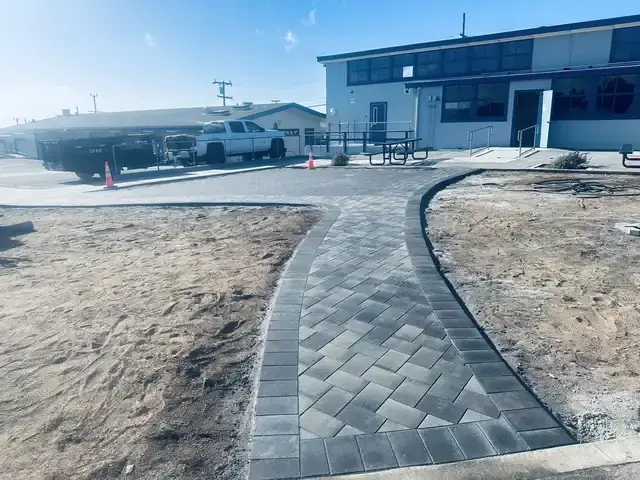
Paver installation starts with prep: the existing ground is excavated to the right depth, a gravel base is laid and compacted, and then a sand setting bed goes down before the pavers are placed. Patterns like herringbone or running bond affect both the look and how much cutting is involved. Edges are secured so the field doesn't drift over time. Joints are filled and the surface is finished so it's ready to walk or drive on.
Mulch and rock installation is less involved structurally but still requires care. Beds are edged cleanly, any existing weeds are removed, and landscape fabric may be used depending on the situation. The material is spread to the right depth and raked level. River rock, decomposed granite, and bark mulch each behave differently, and the right choice depends on the bed's purpose, sun exposure, and what plants are growing in it.
These services are often done together as part of a larger yard project — pavers for the walkway, rock for a dry bed along the fence, mulch for the garden borders. That combination is common and efficient to schedule as a single job.
What Drives the Cost and Timeline
No honest contractor can quote pavers, mulch, or rock without seeing the space first. The factors that affect both cost and how long a job takes include:
- Area size: More square footage means more material and more labor.
- Material choice: Natural stone costs more than concrete pavers; decorative river rock costs more than basic bark mulch.
- Base preparation: In sandy coastal soil like Marina's, a stable compacted base may require more excavation or fill material.
- Paver pattern: More complex patterns take longer to set and produce more cut pieces.
- Existing conditions: Removing old concrete, overgrown beds, or debris adds time before the new work can begin.
- Access: Side yards and narrow gates slow material delivery to the work area.
The best way to know what you're looking at is to get a free estimate. Zelaya's Landscaping Inc. will come look at the yard, listen to what you want, and give you a fair price before anything starts.
How Zelaya's Landscaping Inc. Handles the Job
Jaime and Stephanie run the jobs themselves and stay in direct contact with every customer. When it comes to pavers, mulch, and rock, they help you think through material choices, explain what will work best for your specific yard conditions, and keep the site clean and organized throughout the job. Customers consistently note in their reviews that the crew shows up on time and that the work area is left clean with tools put away at the end of each day.
Choosing the Right Landscaper for Pavers and Rock in Marina
Marina homeowners have no shortage of landscaping options, but a few things are worth checking before you hire anyone. Ask how they handle base prep — this is where shortcuts get taken and where problems show up years later. Find out whether they'll help you choose materials on-site rather than just sending you to pick something from a catalog. And pay attention to whether the person you talk to is actually the person running the job.
Zelaya's Landscaping Inc. is a family business where Jaime and Stephanie are the ones you call and the ones on the job. They serve Marina and surrounding areas across Monterey County and the Monterey Peninsula, and they offer free estimates with no pressure to decide on the spot.
Ready to Get a Free Estimate in Marina?
Call (831) 269-4972 to talk in English, or (831) 442-4323 para español. Tell them what you have in mind, and Jaime and Stephanie will come take a look and give you a straight answer on what it will take.
Frequently asked questions
Do you serve Marina, CA for paver and rock installations?
Yes. Zelaya's Landscaping Inc. serves Marina and the broader Monterey Peninsula and Monterey County. Call (831) 269-4972 for a free estimate at your property.
Can I discuss material options before the job starts?
Yes. Jaime and Stephanie will walk you through material options during the free estimate so you can see what will work best in your actual yard before any decisions are finalized.
How do I know which is better for my yard — river rock, mulch, or decomposed granite?
It depends on your yard's sun exposure, wind, what plants are in the beds, and how much maintenance you want to do. Zelaya's Landscaping Inc. will walk through the options with you during the free estimate so you can make an informed choice.
Does sandy coastal soil affect how pavers are installed?
It can. Sandy soil shifts more easily than compacted clay, so proper base preparation is especially important in Marina's coastal terrain. A well-compacted gravel base prevents settling and uneven surfaces over time.
Can pavers, mulch, and rock all be done in the same project?
Absolutely. These services are often combined in a single yard project — for example, pavers for a walkway, rock for a dry bed, and mulch for garden borders. Doing them together is efficient and gives the whole yard a cohesive look.